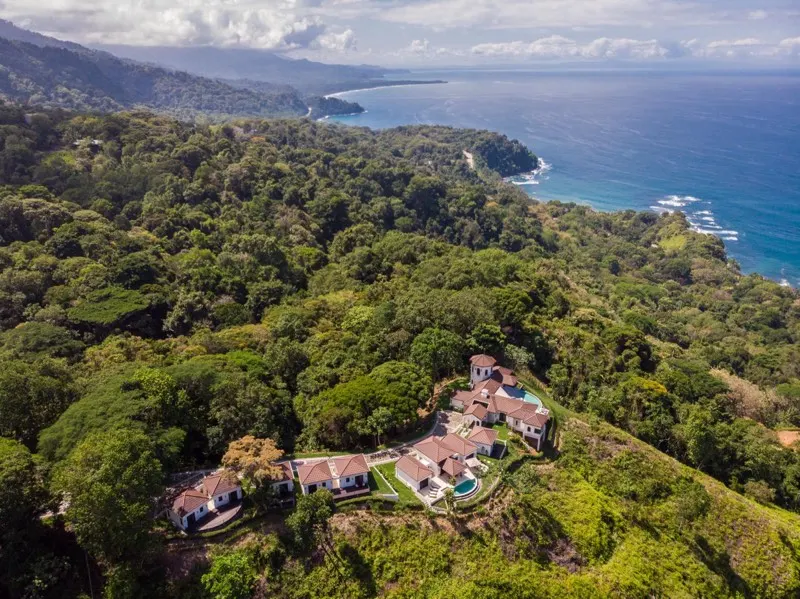
Beaches in Uvita and Dominical: A Local Guide
The beaches in Uvita and Dominical run along one stretch of the south Pacific coast, and they are not interchangeable. Some are calm enough for swimming, others are best for experienced surfers. Some are hidden gems during low tide, which you don’t want to miss! This guide goes through them one at a time, with what each one is actually good for.
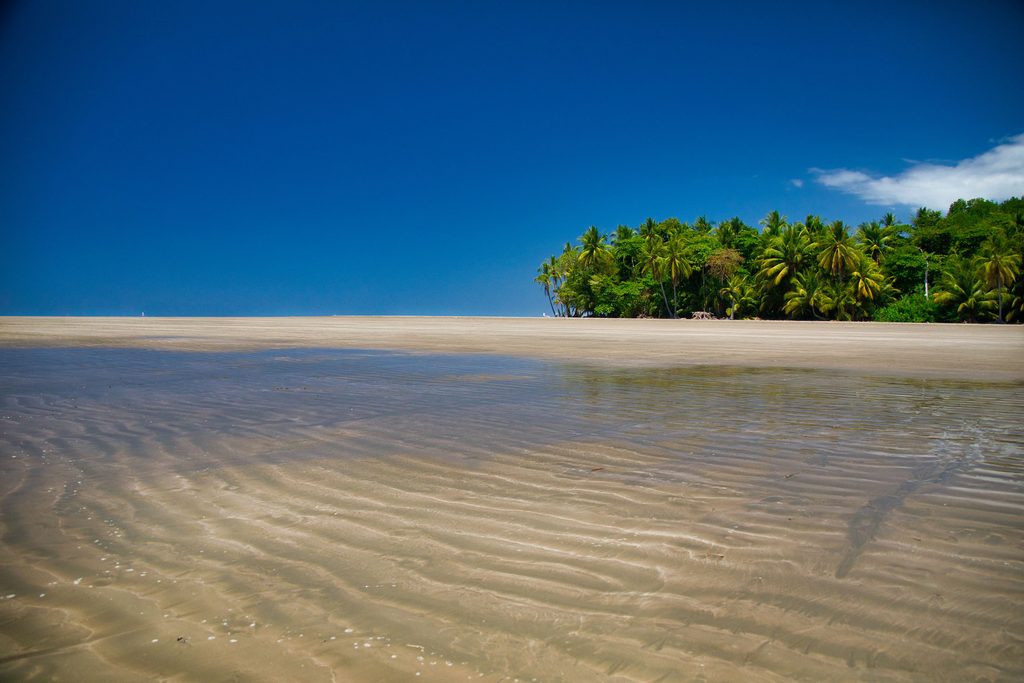
Which beach for what
| If you want | Go to |
|---|---|
| Calm water for swimming | Playa Piñuelas, Playa Ventanas, Playa Colonia |
| The Whale’s Tail | Playa Uvita, at low tide only |
| Surfing | Playa Dominical |
| Snorkeling | The reef at the end of the Whale’s Tail, at low tide |
| Sea caves | Playa Ventanas, at low tide only |
| A secluded, tranquil beach | Playa Arco |
| Somewhere quiet near Dominical | Playa Dominicalito, Rocas de Amancio |
What one park ticket covers
Five of the beaches below sit inside Marino Ballena National Park, which was Costa Rica’s first marine national park and protects 15 kilometers of coastline. According to SINAC, the national parks service:
- Open every day, 7am to 4pm
- $6 for non-resident adults, ₡1,000 for residents. Children under 11 and seniors enter free
- One ticket covers all four sectors, Uvita, Colonia, Ballena and Piñuela, for the whole day, per person
- All four entrances are off the Costanera, the coastal highway
That last point is the one most visitors miss. You can pay once in the morning at Uvita, drive ten minutes south, and walk into Ballena or Piñuela on the same ticket.
There are showers and toilets, and parking in the Ballena sector. Tide tables are posted at the entrance, and they are worth reading before you decide where to spend the day. Vehicles are not allowed on the sand, pets are not permitted, and campfires are prohibited anywhere in the park.
Playa Uvita and the Whale’s Tail
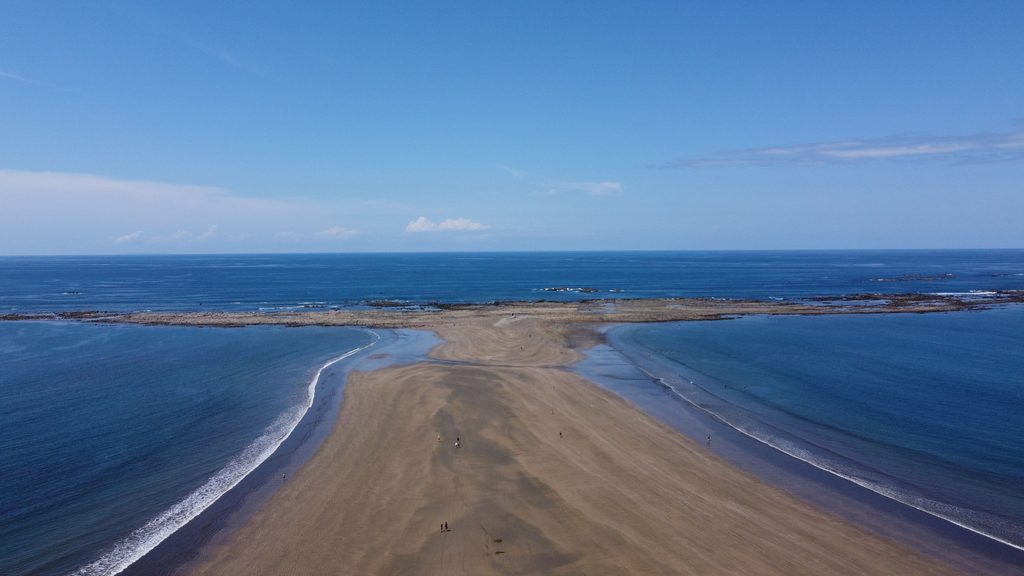
Playa Uvita is the most popular of the beaches in Uvita and Dominical and the reason most people come. At its end is the tómbolo, a sandbar in the shape of a whale’s tail, which SINAC notes can only be walked at low tide, and whose shape is only visible from high ground or from the air.
At the far end there is a rocky reef. Snorkeling is allowed there at low tide with a mask and snorkel only. Diving fins are not permitted.
Give yourself the full low-tide window. The walk out and back is longer than it looks.
Playa Colonia (Playa Chamán)
The same beach goes by both names, which causes a certain amount of confusion in the park. It is the calmest swimming water in the Uvita sector and the one Costa Rican families use, so on a weekend it has a local rather than touristic feel. You can walk north along the sand toward Playa Uvita and the Whale’s Tail.
Playa Arco
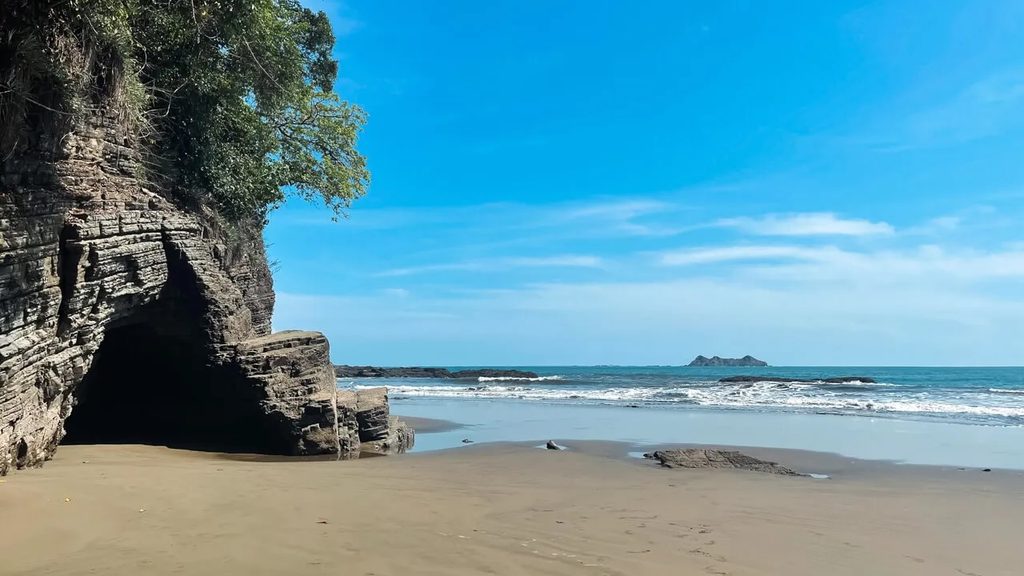
A small beach under a cliff with a natural rock arch, reachable only at low tide. There are two ways in:
1. Through the national park: Pay at the Ballena sector ranger station, then take the marked trail north, walk along the rocky beach crossing two shallow streams, and finish with a short steep climb over a point. It is about 2 kilometers each way and takes roughly half an hour. To find the ranger station, look for Ballena Bistro on the Costanera south of Uvita. The dirt road immediately after it leads down to the station.
2. Through La Cusinga: The lodge has its own trail, about 15 minutes down through the forest and longer coming back up, steep in places. It is open to lodge guests and to anyone eating at their restaurant: tell the guard at the gate that you are going to the restaurant and then down to the beach. If you only want the trail, the lodge charges a day pass, around $15. Rates change, so confirm it with them before you drive out.
Either way, time it with the tide. Arrive an hour or two before low tide and leave within a couple of hours of it. A cave runs right through the cliff at the northern end, roughly 15 meters long. At low tide you can wade through it. At high tide the sea fills it and it is not safe to enter. Two small waterfalls come down near its far entrance.
Wear closed shoes. This is not a flip-flop walk, particularly in the rainy season.
Playa Piñuelas
The quietest swimming beach in the park, in a protected bay with gentle water. If the Uvita entrance looks busy and you have small children with you, this is where to go instead. It gets a fraction of the visitors and it is on the same ticket.
Playa Ventanas
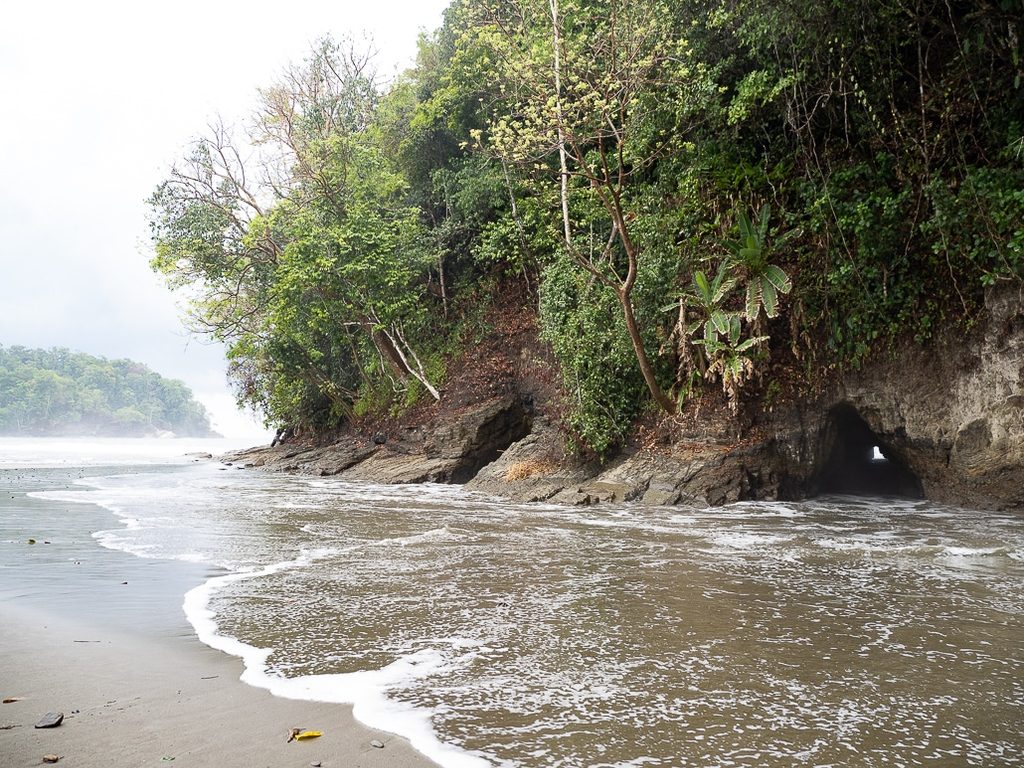
Just south of the park and worth the short drive. Playa Ventanas is named for the sea caves at the northern end of the beach, which can be walked into at low tide and are completely closed off at high tide. The water is usually calm enough for swimming.
Check the tide before you leave. At the wrong hour there is still a beach, but the caves, the reason to come, are underwater.
Playa Dominical
Dominical is about 18 kilometers north of Uvita, roughly a 15-minute drive on the coastal highway.
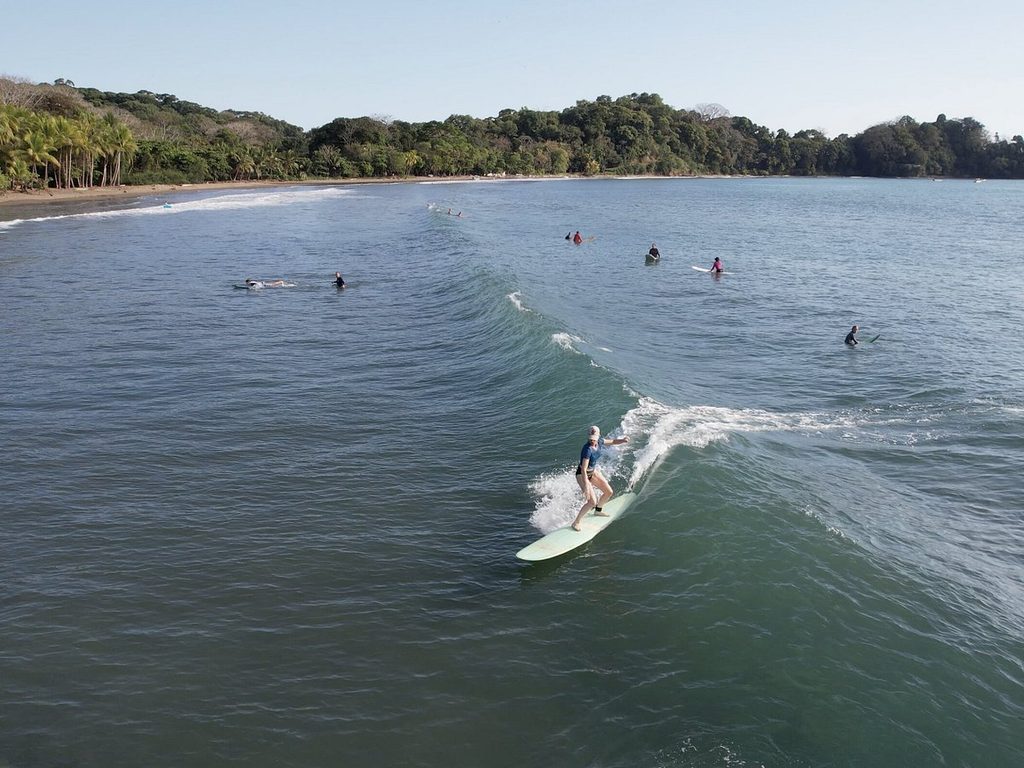
A surf beach, and it should be treated as one. Dominical has a year-round beach break that draws experienced surfers and hosts competitions, and it has strong rip currents. It is not a swimming beach, and it is not a beginner’s surf beach either. If you are learning, Playa Dominicalito and Playa Colonia are the gentler places to start.
It is a genuinely good beach to be on: a long stretch of sand with an esplanade, restaurants and a town behind it. Just go for the sunset and the atmosphere rather than for a swim with the children.
Playa Dominicalito
Five minutes south of Dominical, and the answer to the question most people ask the moment they discover Dominical is not swimmable. Smaller, calmer, lined with coconut palms, with rocky points and small offshore islands. This is where to go if you want the Dominical area without the rip currents. Parking is informal here, so leave nothing visible in the car.
Rocas de Amancio
Just north of Dominicalito, between there and Dominical town, Rocas de Amancio is a rock formation rather than a sand beach. At low tide the rocks hold a set of natural pools, which is the reason to come, and it is one of the best places on this coast to watch the sun go down. Check the tide before you drive out: the pools are only there on the low.
Playa Hermosa
A long, open beach between the two towns, used by local families and by surfers. The surf here is good, but it has rip currents of its own.
Playa Achiote
At the northern tip of Playa Hermosa, Playa Achiote is rocky and quiet, with a river mouth at one end. It is a place to sit for an hour rather than a swimming beach, and the usual caution applies: the current at a river mouth runs harder than it looks.
Can you swim at the beaches in Uvita and Dominical?
At some of them, yes.
The reliably calm water is at Playa Piñuelas, Playa Ventanas and Playa Colonia. Playa Uvita is fine at the shore and more variable out by the tómbolo. Playa Dominical has strong rip currents and is not a swimming beach. Go to Playa Dominicalito instead, five minutes south.
There are often lifeguards at Dominical and Playa Hermosa, but the hours vary, so do not plan around them. SINAC’s own guidance for the park is to avoid marked risk areas and to take particular care near river mouths, where the current runs harder than it looks.
Tides, and why they matter here
Three of the best things on this coast exist only at low tide: the Whale’s Tail, the sea caves at Playa Ventanas, and the cave and rock arch at Playa Arco.
Check the tide the night before and build the day around it. Tide tables are posted at every park entrance, and any hotel or rental on this coast can tell you the day’s times. It is the single piece of planning that changes a beach day here.
Getting there and parking
Every beach in this guide is reached from the Costanera, the paved coastal highway, and the highway itself is fine for any rental car.
The access roads are a different question. We strongly recommend a 4×4, especially between April and December, when the unpaved roads on this coast get muddy. For the beaches themselves, the park entrances are signed from the highway and there is parking in the Ballena sector. For less popular beaches, the paths to enter are usually findable through Google Maps, or ask a local! We recommend leaving nothing visible in the car for any of the beaches, out of caution.
Frequently asked questions
Can you swim at Dominical beach?
Not safely. Playa Dominical has strong rip currents year-round and is known as a surf beach rather than a swimming one. For calm water nearby, go to Playa Dominicalito, about five minutes south, or Playa Piñuelas inside the national park.
When can you walk out to the Whale’s Tail?
Only at low tide. The sandbar is submerged at high tide. Tide tables are posted at the park entrance, and the walk out and back takes longer than it appears from the shore, so start early in the low-tide window.
What is the best beach in Uvita for families?
Playa Piñuelas and Playa Colonia have the calmest water and the fewest people. Both are inside the national park and covered by the same ticket as Playa Uvita, so you can see the Whale’s Tail in the morning and swim somewhere gentler afterward.
Do you need a 4×4 to reach the beaches?
Not for the beaches themselves, which are reached from the paved coastal highway. A 4×4 is strongly recommended for the unpaved hillside roads to many properties on this coast, particularly between April and December.
Where we are
The Terraces is in the hills above Uvita, about ten minutes from the national park entrance. Two villas, each with three bedrooms and a private pool, six guests in each and twelve across both.
Arboretum is above Dominical: two houses and six one-bedroom villas on one estate, holding up to 30 guests across 11 bedrooms when booked in full.
If you are working out which stretch of this coast suits your trip, write to us with your dates and roughly how many of you there are. We can also arrange a private chef and, through a local concierge, the tours and activities worth doing while you are here.